Neurotechnology Research
Pioneering brain-computer interfaces and neural signal processing technologies that transform how we interact with machines.
Personal Projects
Independent research and development
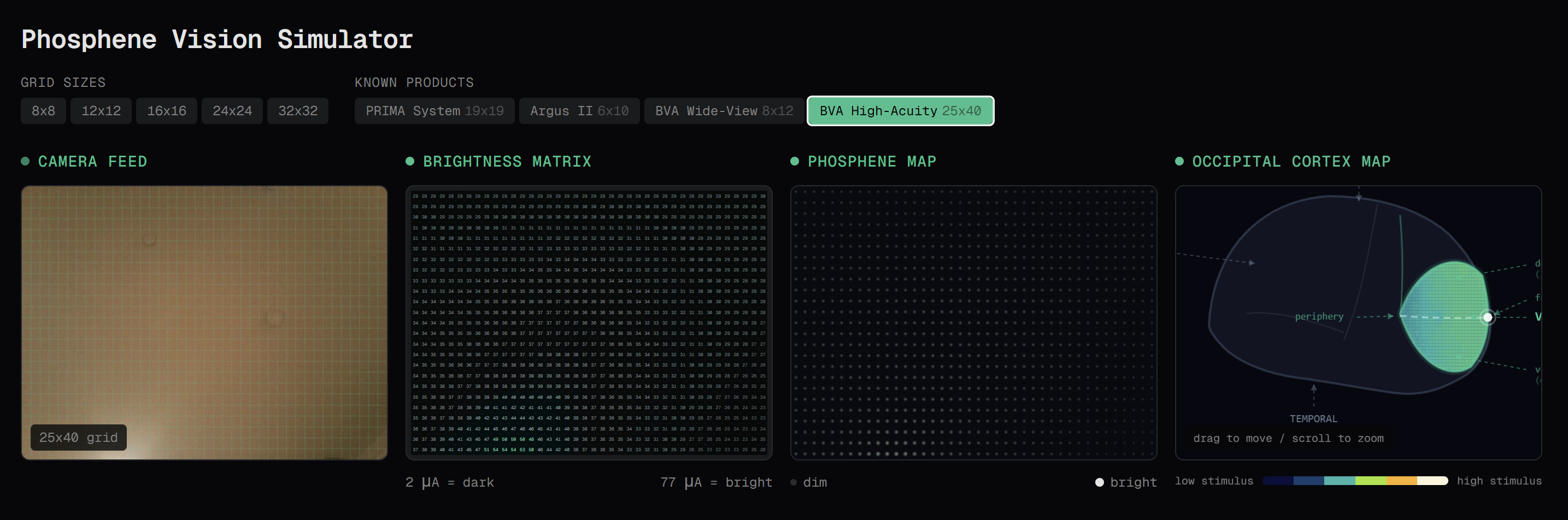
Phosphene Vision Simulator
An interactive simulator that models how a visual cortex prosthesis translates camera input into phosphene patterns on the primary visual cortex (V1). Implements retinotopic mapping to visualize how electrical stimulation of cortical neurons would produce perceived points of light, providing insight into the future of cortical visual prosthetics.
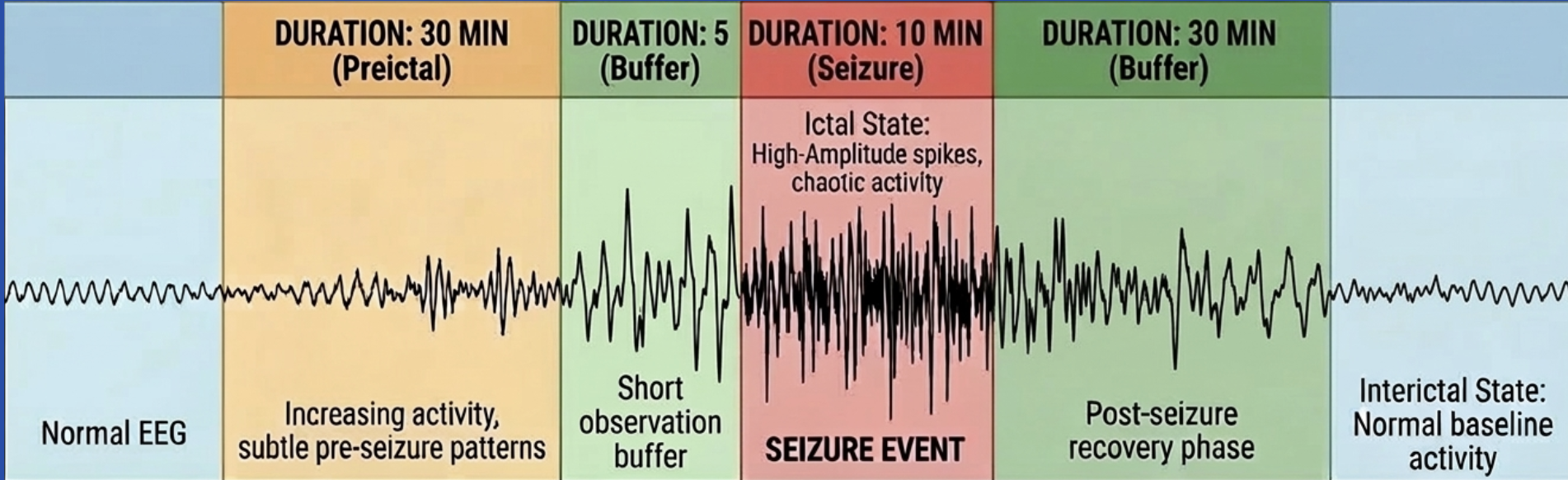
Pre-ictal Seizure Detection
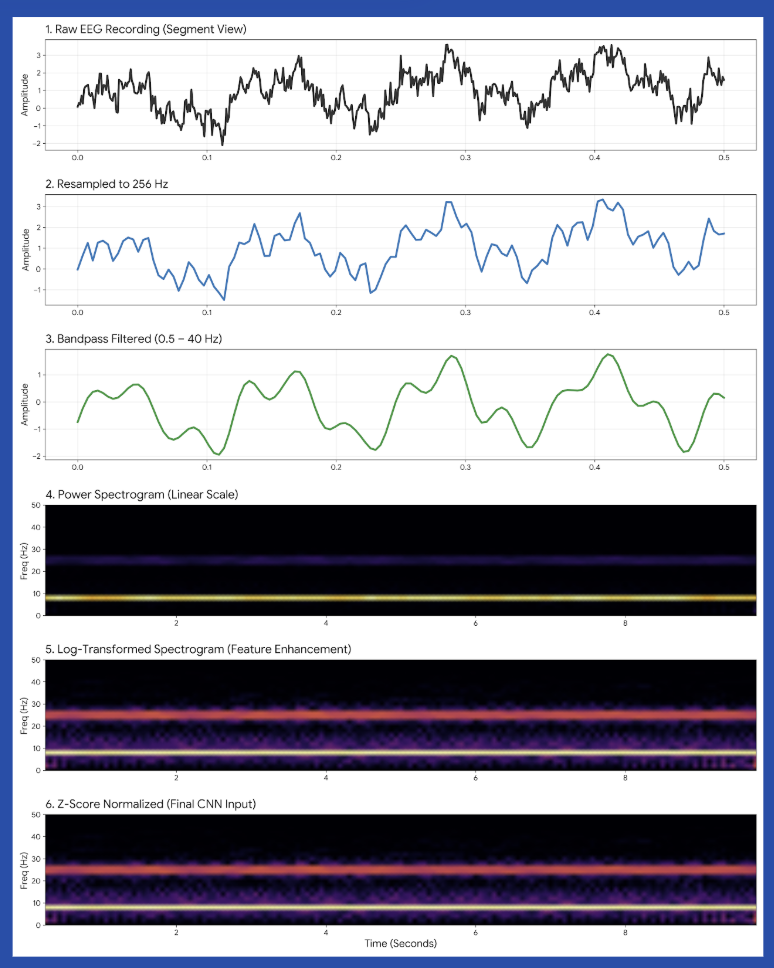
Developed a patient-specific deep learning model to investigate pre-ictal seizure detection using EEG data. Applied signal processing and time-frequency analysis to generate EEG spectrograms and trained a convolutional neural network (CNN) to distinguish brain activity preceding seizures from interictal activity.
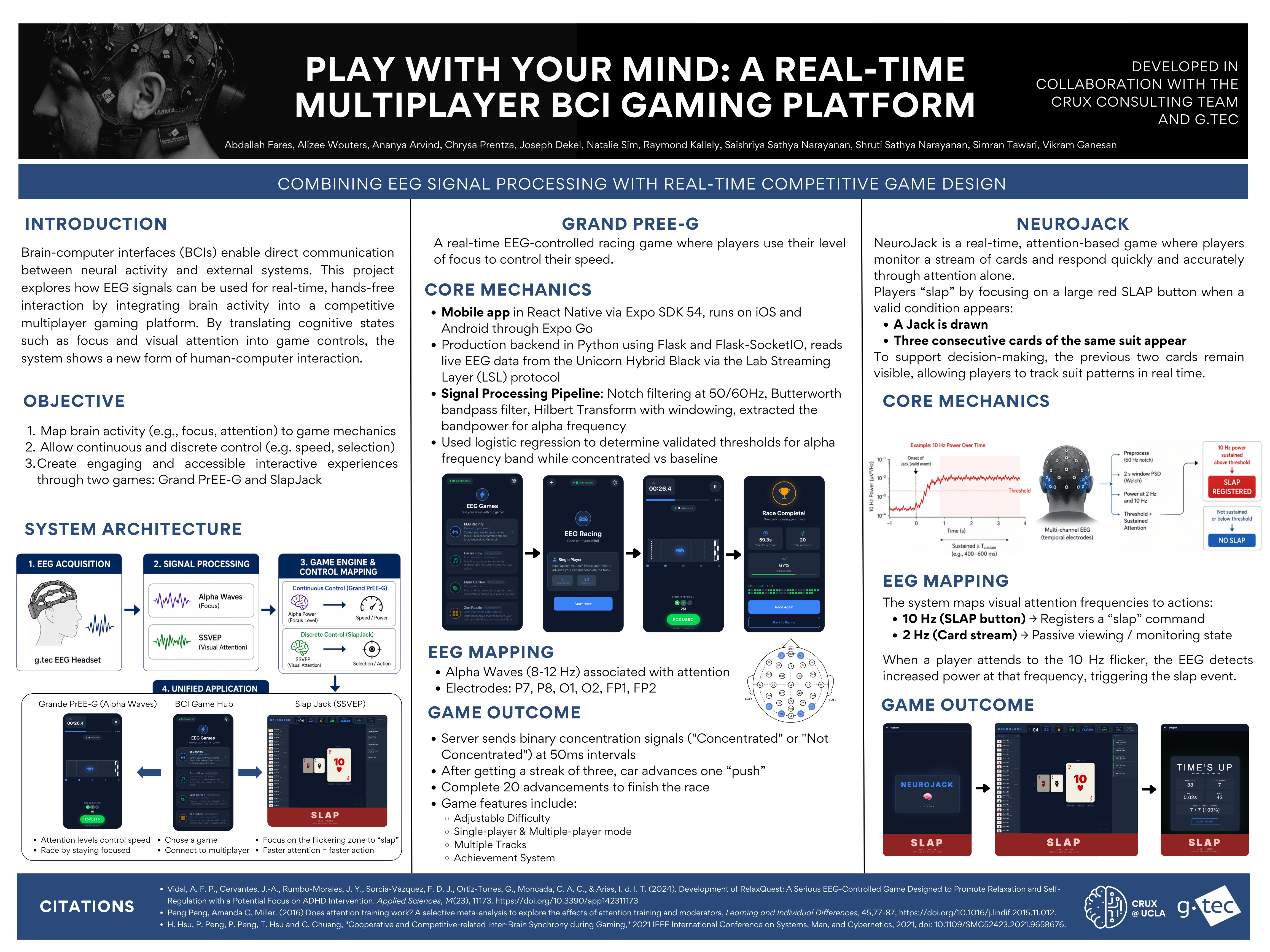
Play With Your Mind: Real-Time Multiplayer BCI Gaming Platform
Developed a real-time multiplayer brain-computer interface (BCI) gaming platform in collaboration with g.tec and CruX at UCLA. Integrated EEG signal processing and machine learning to translate brain activity into game controls, enabling players to compete in an attention-controlled racing game and an SSVEP-based card game.
Past Projects
Stress Detection EEG Applied to Poker
Building on our previous emotion detection research, this project focuses on stress detection during poker gameplay using a redesigned discrete EEG headset. The system has been completely concealed within a baseball cap for unobtrusive monitoring during competitive gaming scenarios.
Discrete EEG System Development
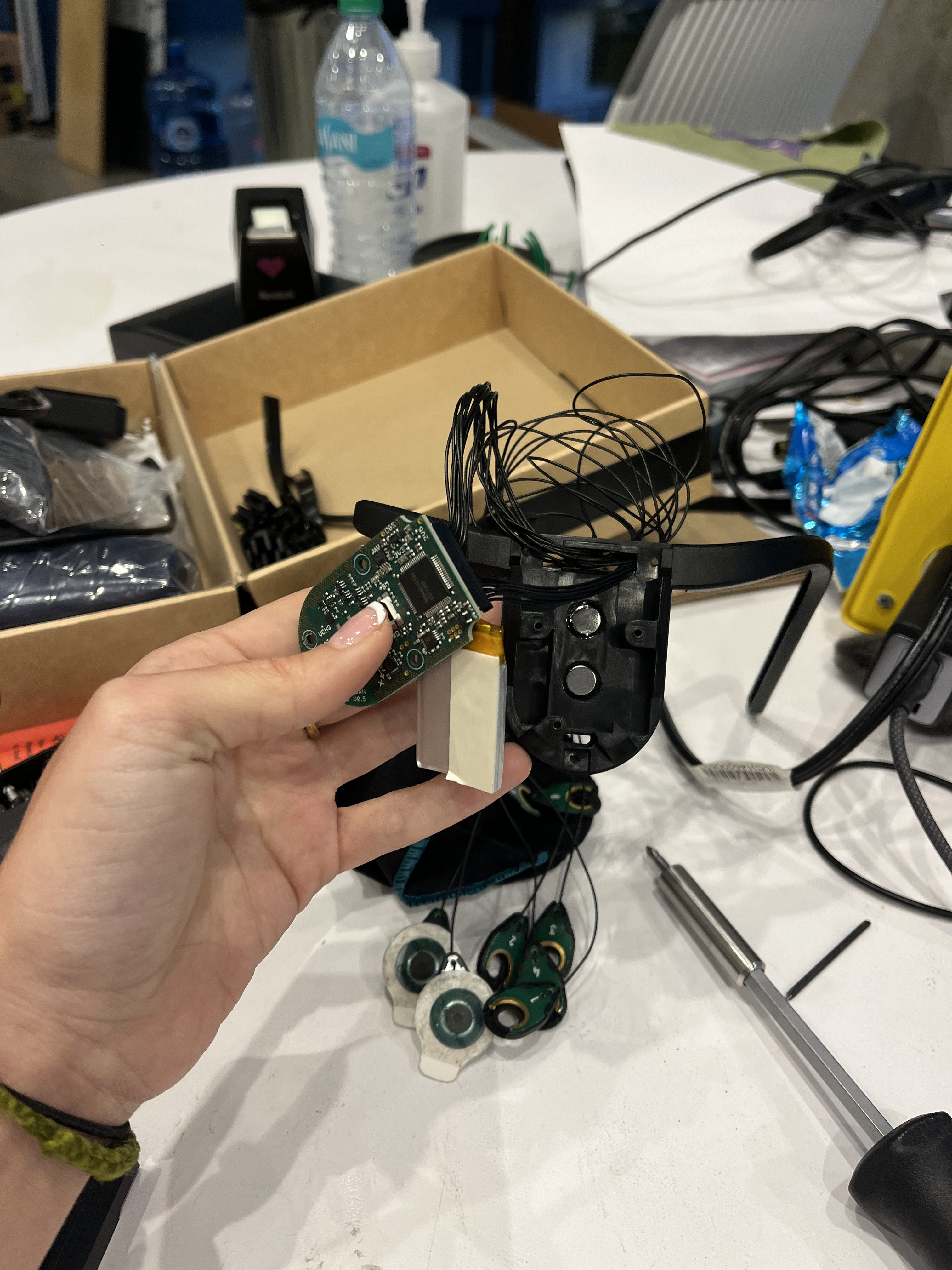
Signal processing hardware and electrode interface components before cap integration
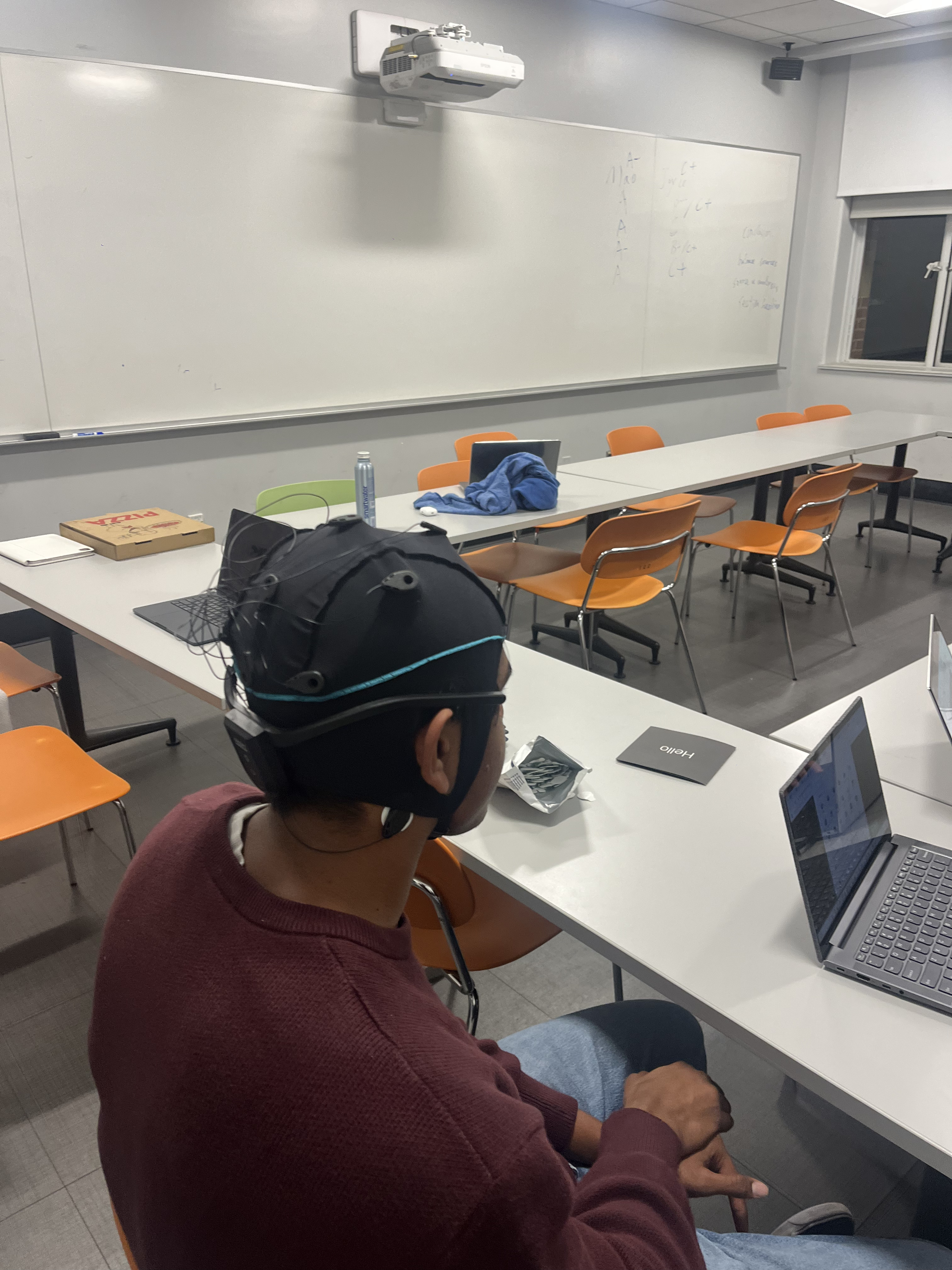
Initial EEG data collection for cognitive state classification
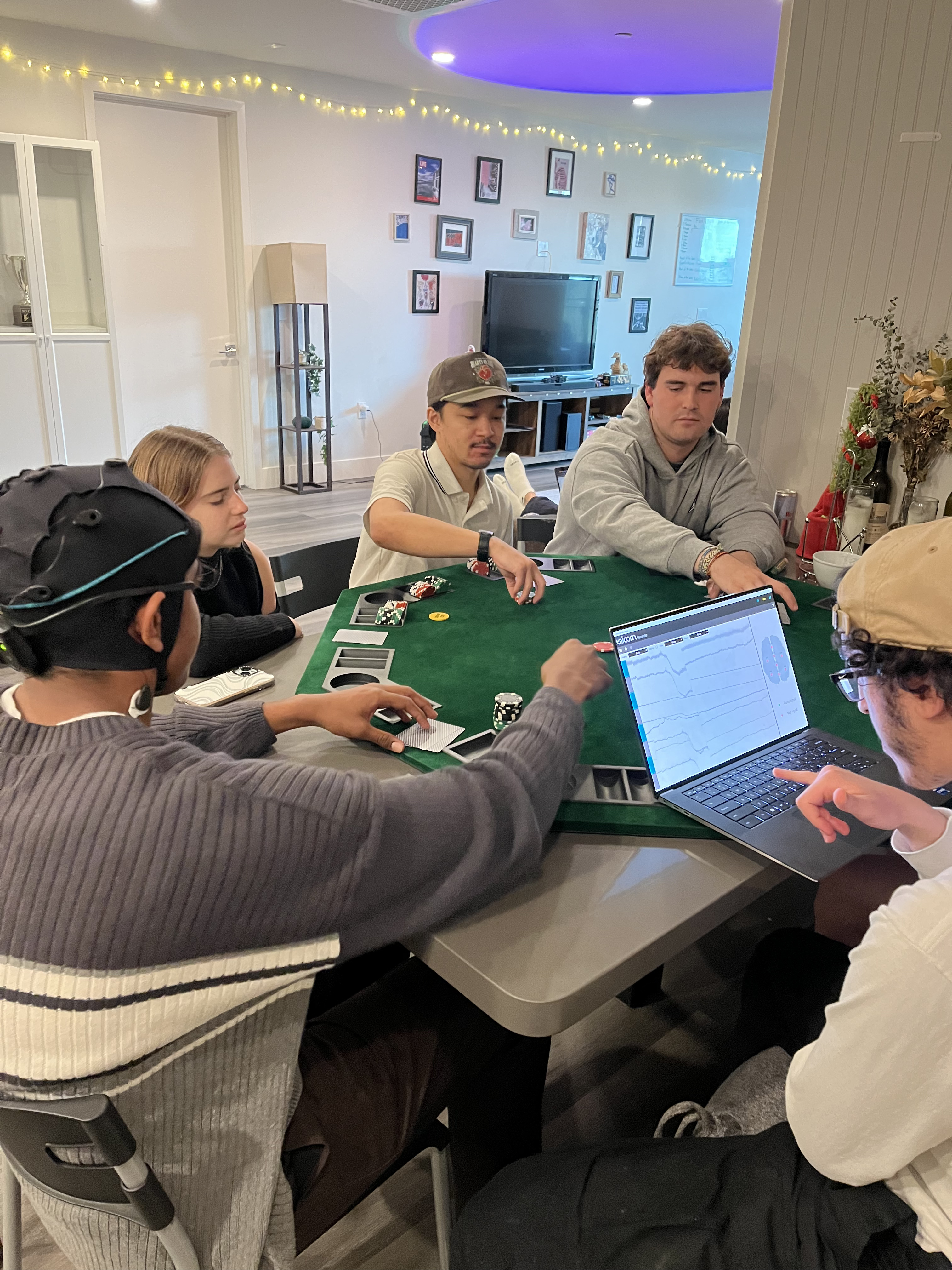
Real-world testing during poker gameplay with EEG monitoring and data collection
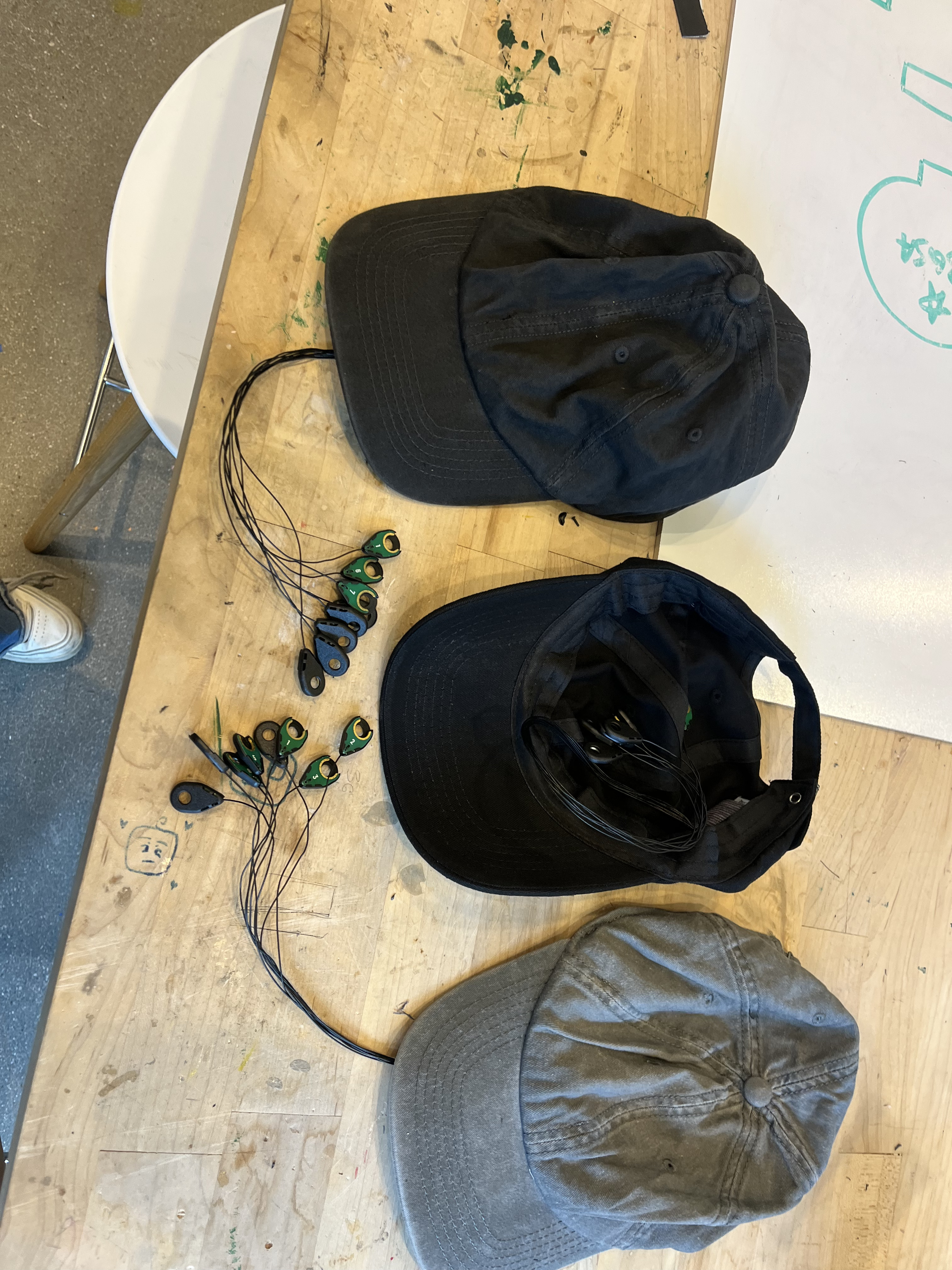
Multiple discrete EEG headsets in various stages of assembly and testing for multiple poker players
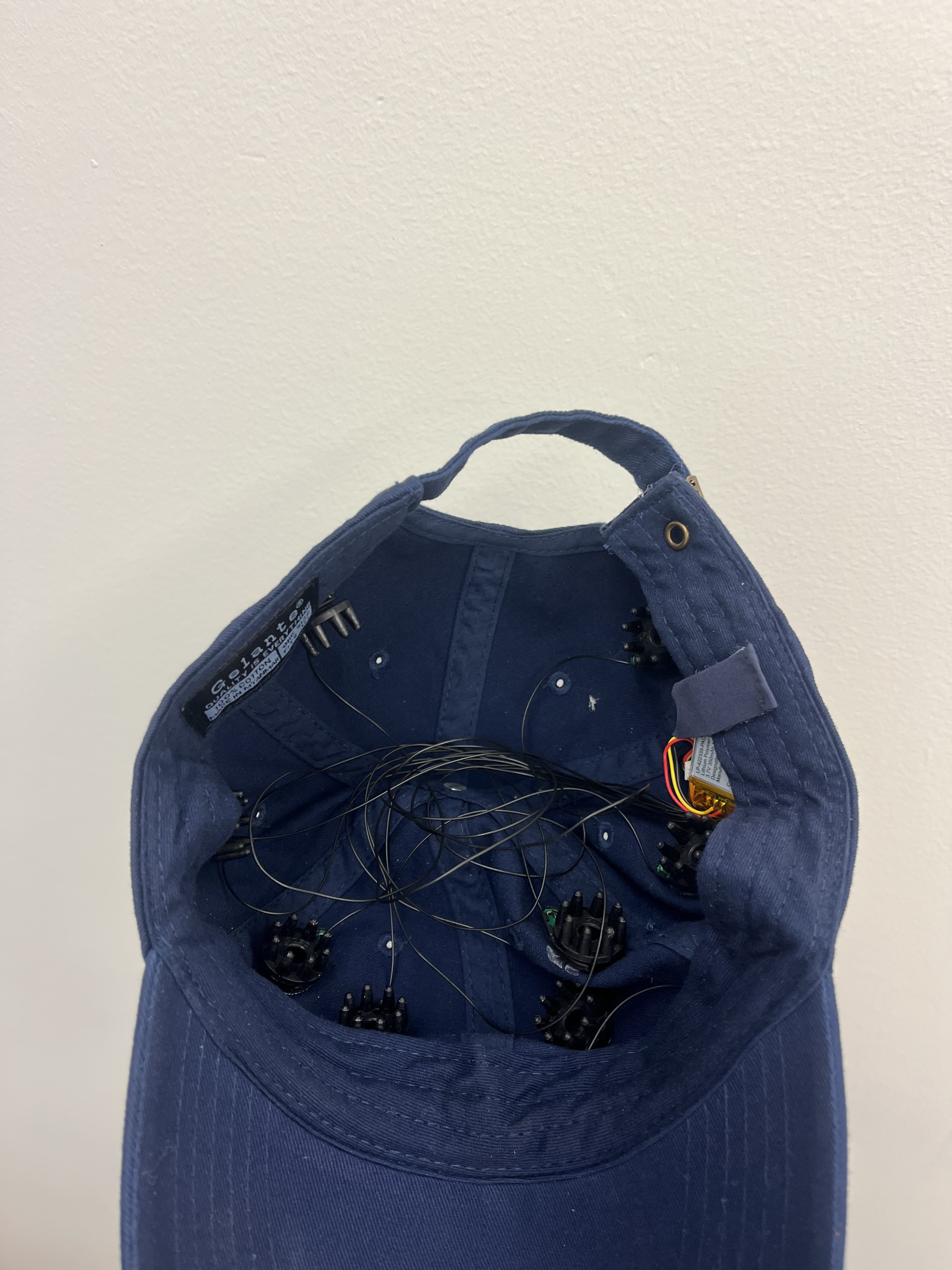
Interior view showing fully integrated electrode array and signal processing electronics
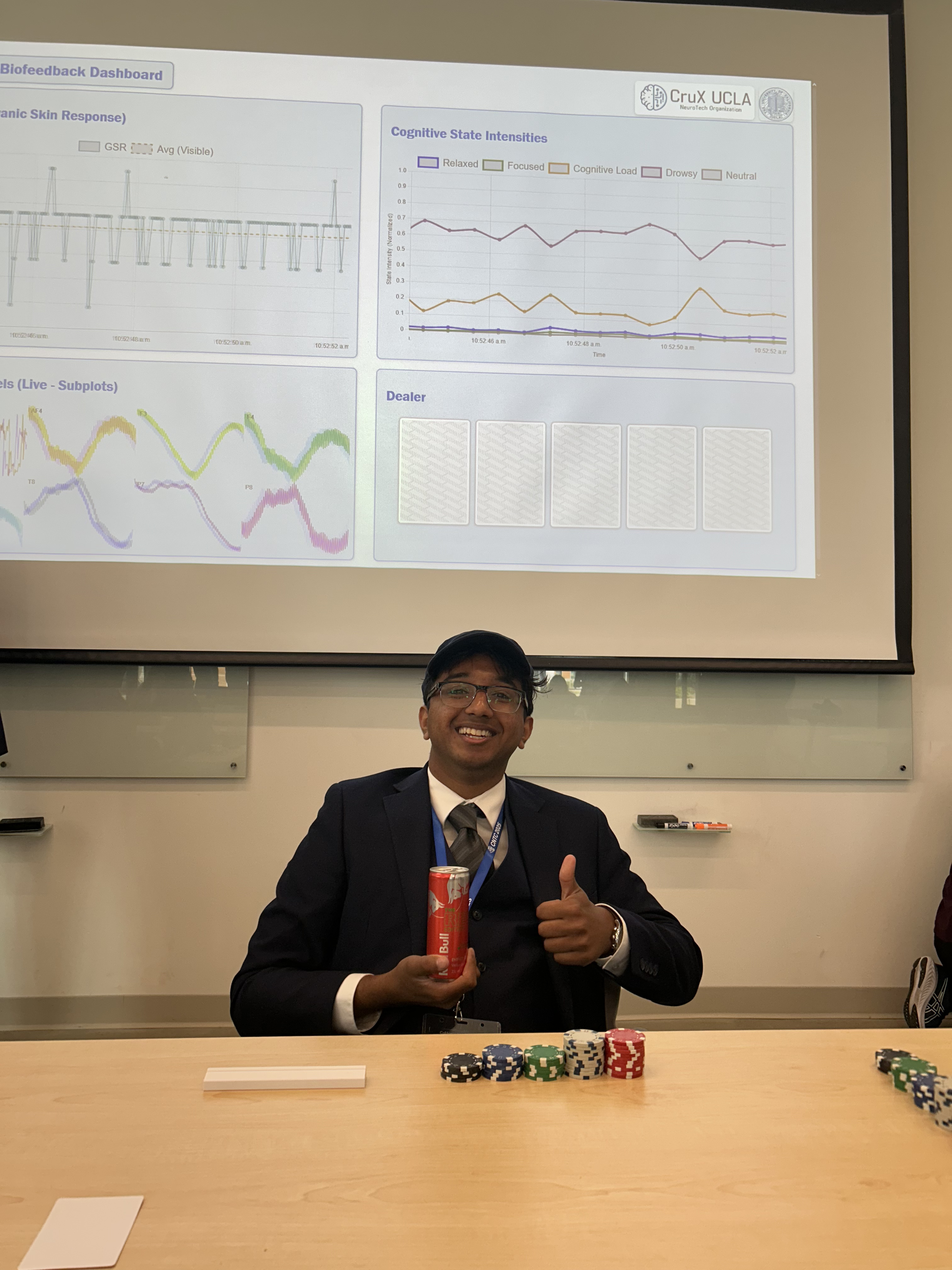
Conference presentation displaying real-time biofeedback dashboard with cognitive state monitoring
Technical Improvements
- Complete concealment within baseball cap
- Miniaturized signal processing electronics
- Real-time stress level monitoring
- Wireless data transmission capabilities
Research Applications
This discrete system enables unobtrusive monitoring of cognitive load and stress responses during competitive gaming, with potential applications in sports psychology, performance optimization, and behavioral research in naturalistic settings.
Project Documentation
Project Presentation
Poker stress detection research slideshow and methodology
Emotion Detection with EEG
Research focused on developing wearable EEG systems capable of real-time emotion recognition. This work has applications in mental health monitoring, human-computer interaction, and adaptive user interfaces.
Development Process & Hardware
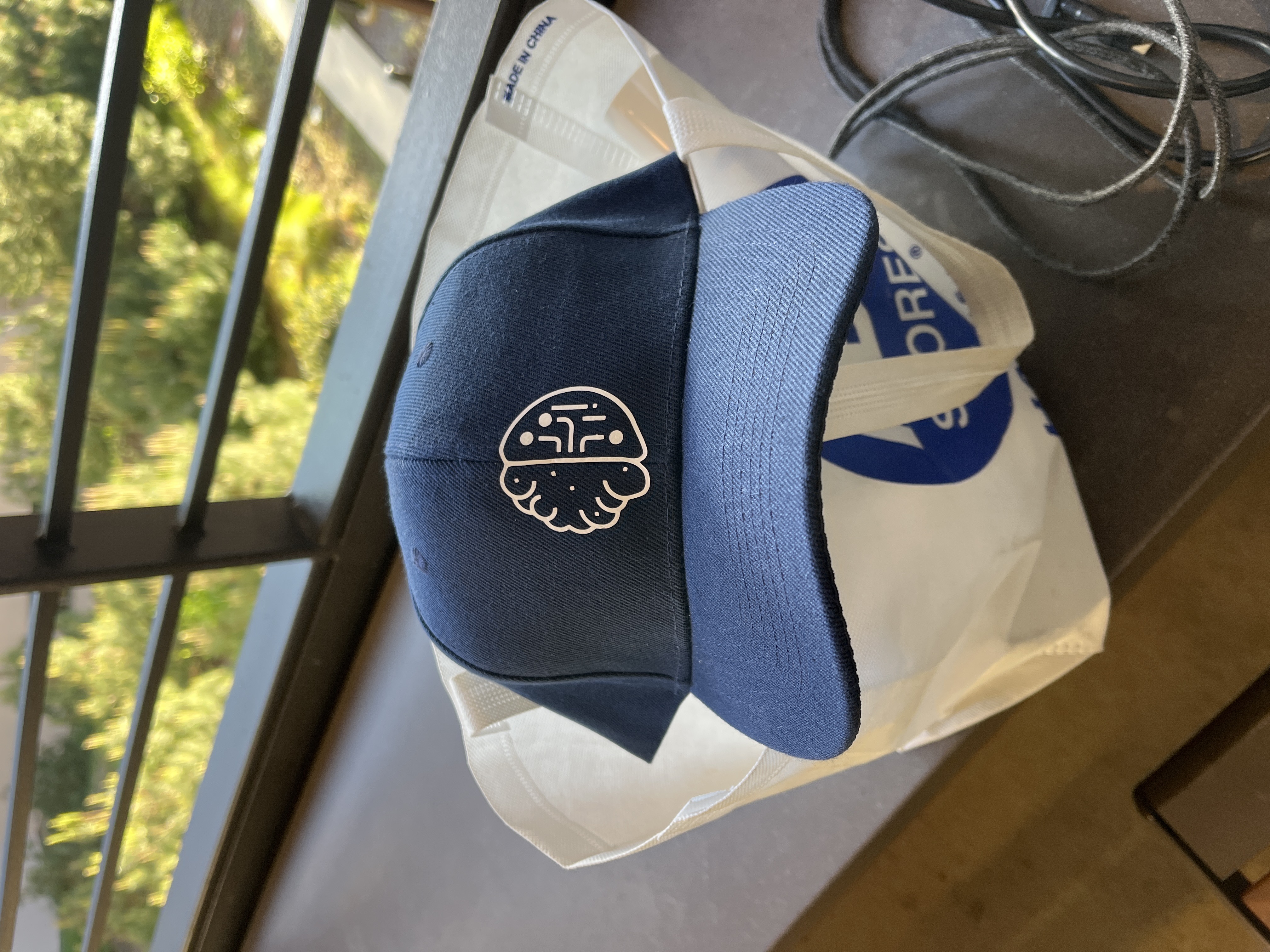
Branding: customized cap with CruX logo
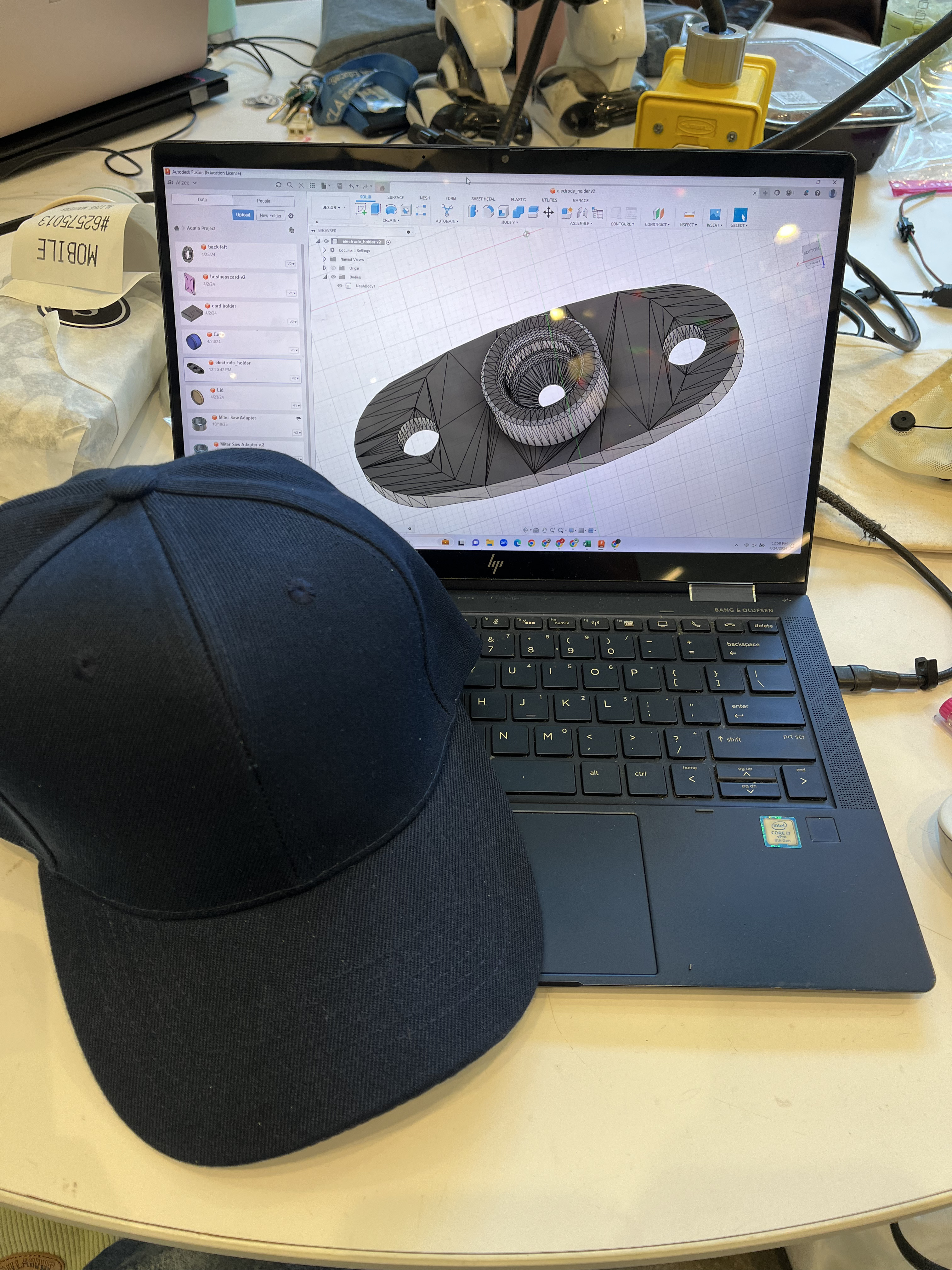
3D CAD modeling of the EEG electrode casings: developed such that gel electrodes can be removed and cleaned
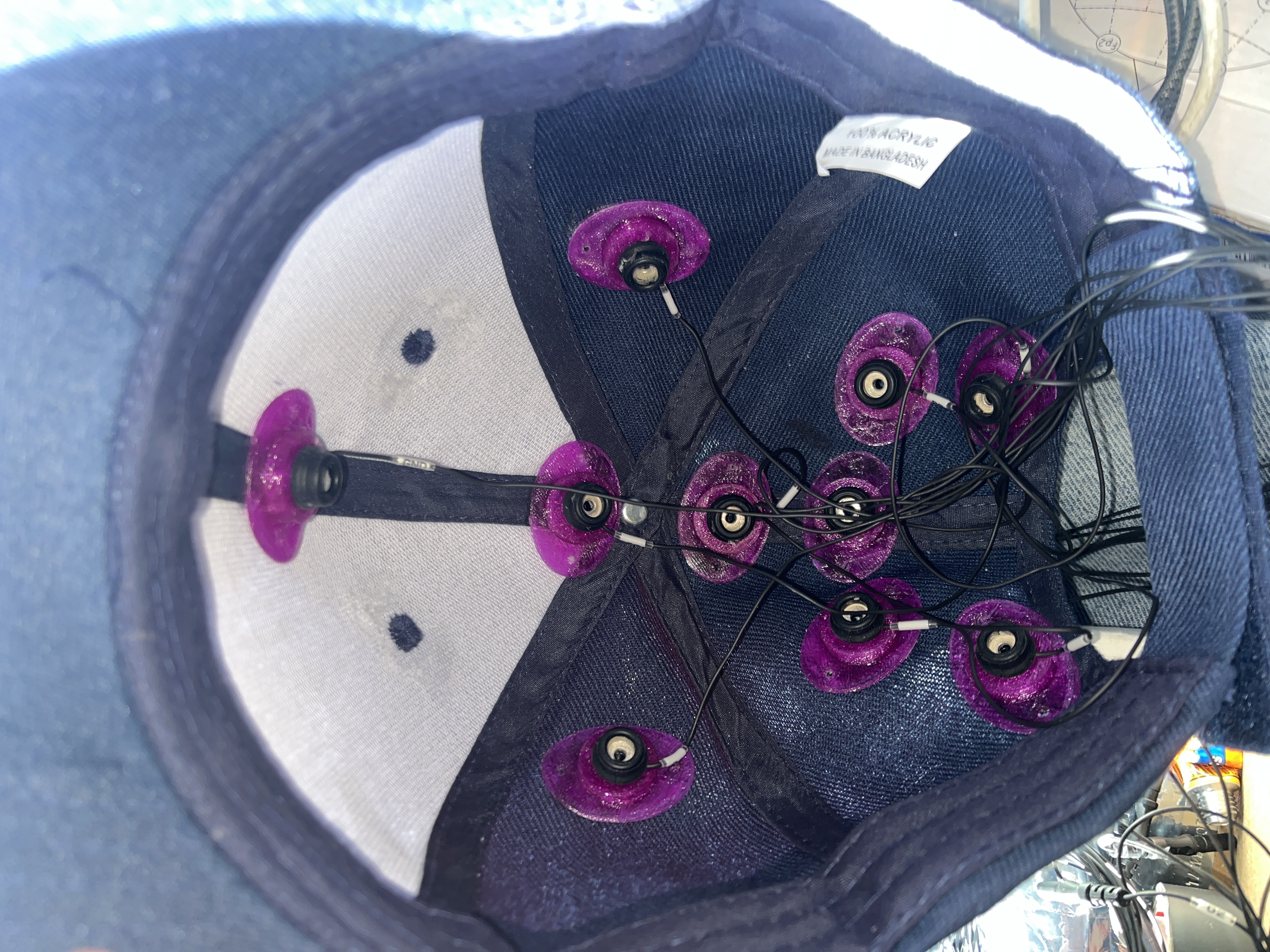
Electrode integration: electrode casings were 3D printed with flexible TPU for user comfort
Completed discrete EEG headset: worn by one of our project presenters
Research Areas
- Signal acquisition and preprocessing
- Feature extraction from neural oscillations
- Deep learning classification models
- Wearable device integration
Applications
Creating systems that can monitor emotional states in real-time, enabling personalized interventions and adaptive technologies that respond to user emotional needs.
Project Documentation
Project Presentation
Complete project slideshow and results
California Neurotechnology Conference
Our emotion detection EEG project was presented at the California Neurotechnology Conference in a competitive research presentation. The project won first place, earning recognition for innovation in wearable neurotechnology and real-time emotion recognition systems.
Award: First Place Winner - Neuroscience and Neurotechnology Primer with Queen's University
CruX - Brain-Controlled Pincher
Developing an innovative brain-controlled prosthetic pincher that translates neural signals into precise mechanical movements. This type of research would represent a significant advancement in assistive technology for individuals with motor impairments.
Key Features
- Real-time EEG signal processing
- Machine learning-based intent recognition
- Precise motor control algorithms
- User-adaptive calibration system
Technical Approach
Utilizing advanced signal processing techniques combined with machine learning algorithms to decode motor intentions from neural activity, enabling intuitive control of prosthetic devices.
Outcome
Our team was partially successful in developing the brain-controlled interface. While we achieved significant progress in EEG signal processing and mechanical control, we encountered challenges with motor imagery classification that prevented full implementation of the intended brain-control functionality. This experience provided valuable insights into the complexities of brain-computer interface development.
Hardware Implementation
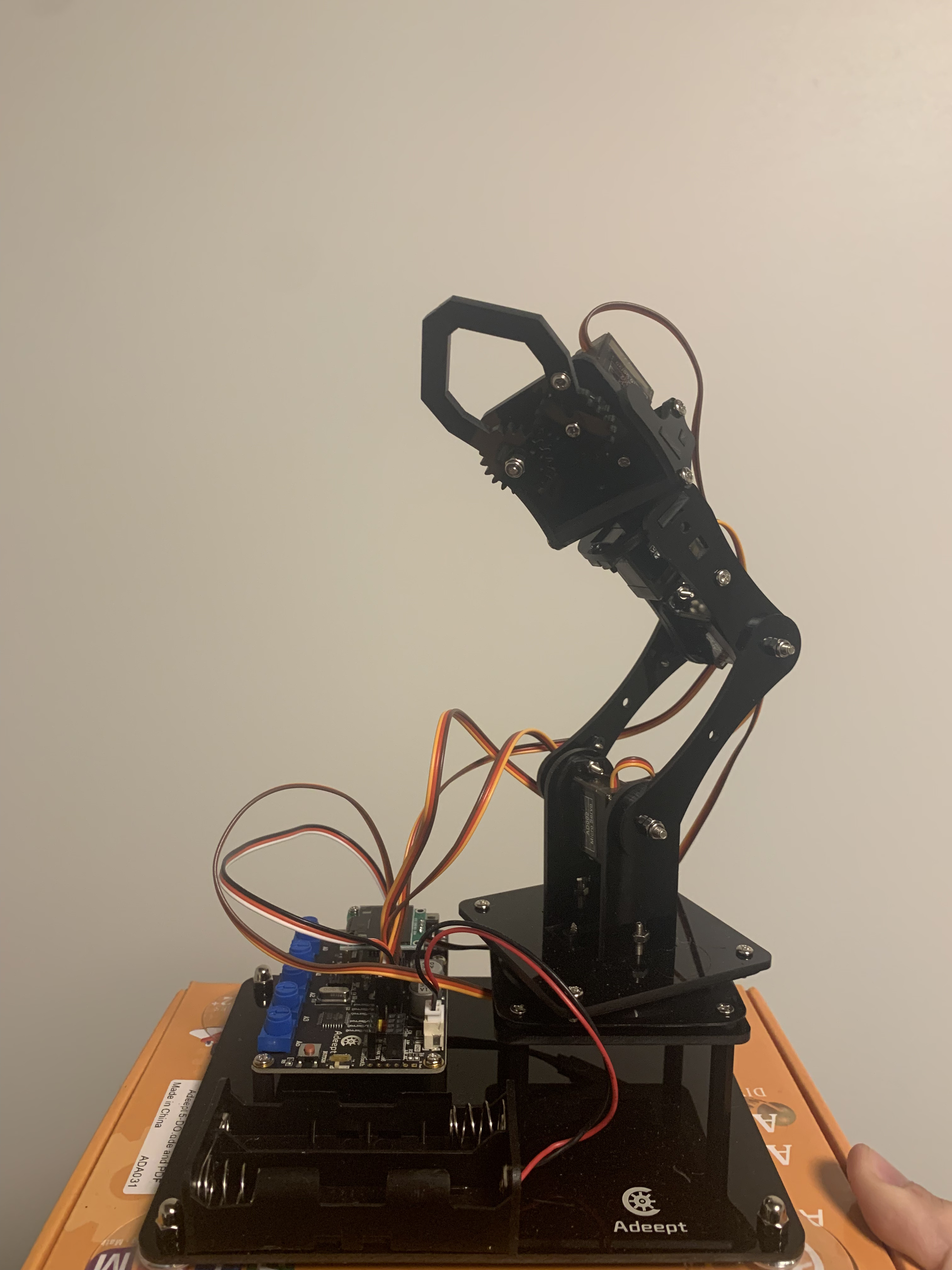
Physical implementation with Arduino control board and multi-jointed articulated arm